
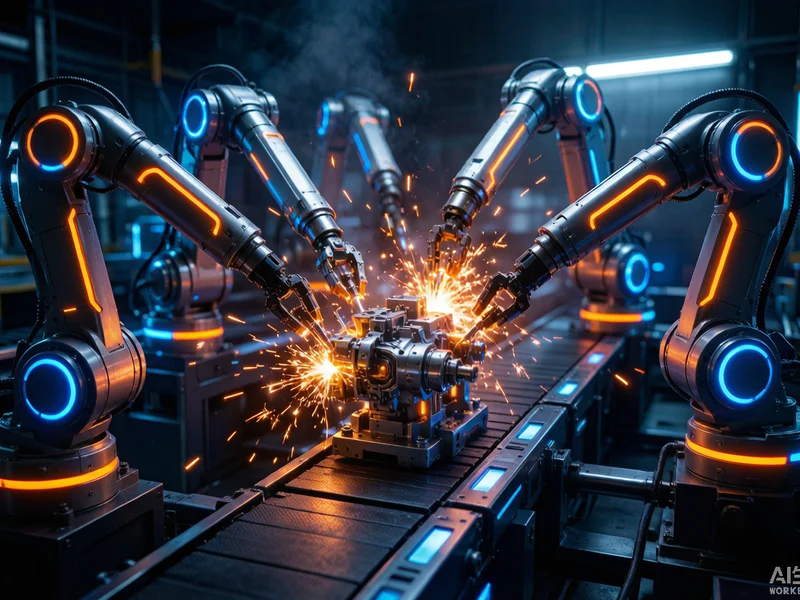
A collaborative arm, an AGV, a humanoid — whatever robot you are building, the question is always the same: what material should each part use, and how do I keep the BOM sane?
The honest answer, after machining parts for robot builders across the industry, is that most of your robot should be 6061 aluminum, engineering plastics, and off-the-shelf standard parts — with expensive alloys reserved for a handful of genuinely stressed components. Here is the breakdown, subsystem by subsystem.
The 30-second answer
| Component group | Recommended material | Why |
|---|---|---|
| Structural frames, bases, arms | 6061-T6 aluminum | Best strength-to-cost balance, easy to machine, welds well |
| High-stress joints, flanges | 7075-T6 or 17-4PH stainless | Where 6061 genuinely is not strong enough |
| Precision transmission interfaces | 4140/4340 steel, precision-ground | Stiffness, wear resistance, thermal stability |
| End effectors, grippers | 6061, or PEEK / Delrin | Light tips = better dynamics; plastics cut cost fast |
| Housings, covers, cabinets | 5052 sheet aluminum or PC | Sheet metal forming, not billet machining |
| Wear parts, bushings, pads | Delrin (POM), UHMW-PE | Self-lubricating, cheap, quiet |
If you only remember one line: put your money where the stress is — 6061 + plastics + standard parts everywhere else.
Subsystem by subsystem: what robot parts actually need
1. Structural frames, bases and arms — 6061-T6
The base, main arm, and rotary column carry static and dynamic loads, but rarely extreme local stress. 6061-T6 handles this at the lowest cost with excellent machinability — we hold tight tolerances in fewer passes, and it anodizes to a clean uniform finish that robot builders want for product photos and IP protection.
Cost rule: for long profiles (arm extrusions, rails), buy aluminum extrusion stock and machine the ends, rather than hogging the whole length out of a billet. You pay for a lot less scrap.
2. Joints, flanges and high-stress brackets — 7075 or 17-4PH, selectively
Robot joints see fatigue loading and stress concentrations. When a bracket keeps failing in 6061, upgrade the local part to 7075-T6 (about 80% stronger) or, for compact high-load interfaces, 17-4PH stainless. But upgrade selectively — a whole arm in 7075 is usually over-engineering that triples material cost.
3. Precision transmission — steel, precision-ground, or buy the gearbox
Harmonic-drive interfaces, reducer housings, and output flanges need stiffness and wear resistance under continuous motion. 4140/4340 steel, heat-treated and precision-ground, is the workhorse. Whatever you do, do not try to make the gearbox itself — buy the harmonic reducer or planetary gearhead as a standard part and machine only the mounting interface around it.
4. End effectors — lighten the tip, or switch to plastic
Every gram at the robot tip multiplies through the whole arm. CNC-machined 6061 or 7075 gripper fingers are standard — but for many pick-and-place jobs, PEEK, Delrin or nylon fingers are lighter, cheaper, and gripper-friendly. We have replaced metal fingers with plastic at a fraction of the cost without losing function.
5. Housings, covers and cabinets — sheet metal, not billet
A controller cabinet or cover machined from a solid block is beautiful and wildly expensive. 5052 aluminum sheet, folded and welded (or PC sheet for transparent guards) does the job at 10–20% of the cost. Reserve machining for the mounting bosses and cutouts that need precision.
6. Wear parts, bushings and pads — let plastic take the hit
Self-lubricating Delrin (POM) and UHMW-PE replace bronze bushings and steel wear pads in most robot applications: lower friction, quieter, no lubrication maintenance, and dramatically cheaper. They are also the right answer for rail guides and cable-management links.
Five iron rules for cutting robot part cost
- Spec the alloy you need, not the one that sounds good. 6061 first; 7075 or steel only where stress proves it.
- Let the material form follow the volume. Sheet → folded sheet metal. Long runs → extrusion stock. Mass production → die casting or injection molding. Small batches → CNC. Matching form to quantity is the single biggest saving.
- Let plastics replace metal in grippers, wear parts, and guards — not just cheaper, often better.
- Buy standard parts. Bearings, linear rails, fasteners, gearboxes, motors — never machine what a catalog sells cheaper and better.
- Let DFM save money at the drawing stage. Wall thickness, tolerances you actually need, and feature simplification can cut machined-part cost by 30–50% before a single chip is cut.
Send us your robot’s BOM
We machine structural and precision parts for robot builders daily — aluminum, steel, titanium and engineering plastics, from one-off prototypes to production batches. Send your STEP files or drawings and our engineers will flag where you are over-specifying material and where you can safely save.
Get a free DFM review and quote · See our robotics case studies · Browse the full materials guide · Aluminum vs steel, the longer version