
Industries
Robotics & Automation Parts
Joint parts · Reducer housings · High-precision motion control. Custom CNC parts for robotic arms, AGVs, and automated production lines.
Capabilities
Robotics Component Categories
We supply precision parts for every stage of robotic systems.
Joint Modules
- — Harmonic reducer planet carriers
- — Bearing seats
- — High-precision rotary parts
- — Cable routing channels
Precision Tolerance
±0.005mm
Requires precision finishing & inspection. Subject to drawing review.
Common Materials
Aluminum 7075, Steel 4140, Titanium
Reducer Parts
- — RV reducer housings
- — Cycloidal gears
- — Input/output shafts
- — Reducer mounting plates
Precision Tolerance
±0.01mm
Requires precision finishing & inspection. Subject to drawing review.
Common Materials
Steel 20CrMnTi, 40Cr, Aluminum 6061-T6
End Effectors
- — Gripper bases
- — Suction cup mounts
- — End-tooling fixtures
- — Tool changer adapters
Precision Tolerance
±0.005mm
Requires precision finishing & inspection. Subject to drawing review.
Common Materials
Aluminum 6061, POM, Stainless 303
Sensor Brackets
- — Encoder mounts
- — Signal acquisition housings
- — Vision brackets
- — Limit switch fixtures
Precision Tolerance
±0.01mm
Requires precision finishing & inspection. Subject to drawing review.
Common Materials
Aluminum, Brass, Engineering Plastics
Product Showcase
Robotics Parts Gallery
Custom CNC machined brackets, mounts, and structural parts for robotics and automation systems. Product renderings for process demonstration only. Visual representation of machining capabilities. Images are for reference only due to NDA.
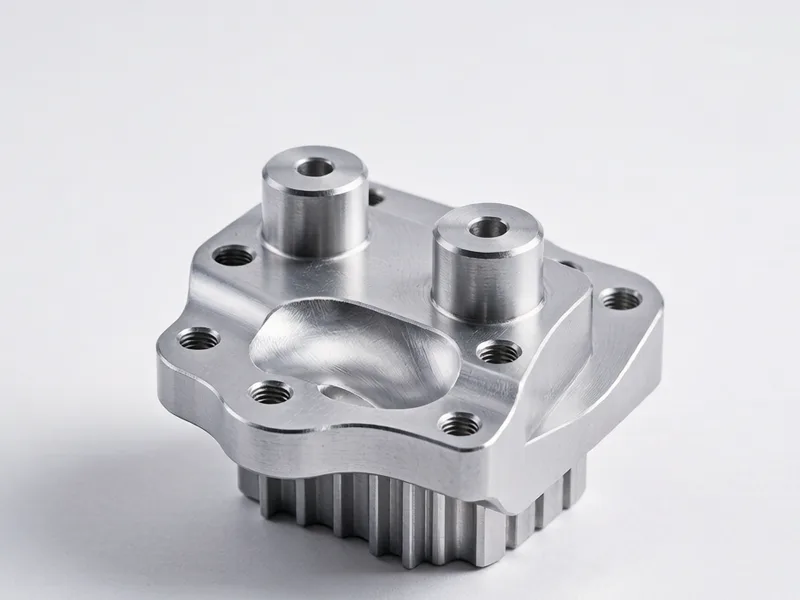
Custom Brackets
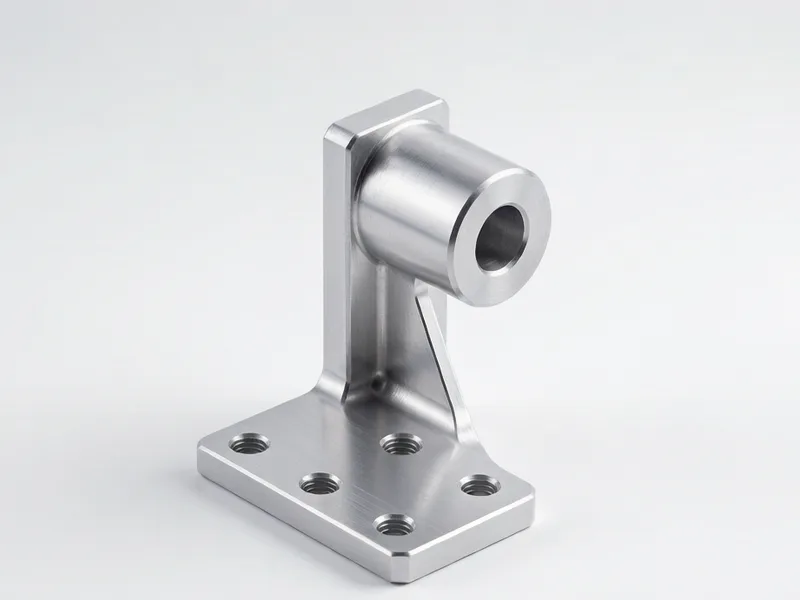
Mounting Brackets
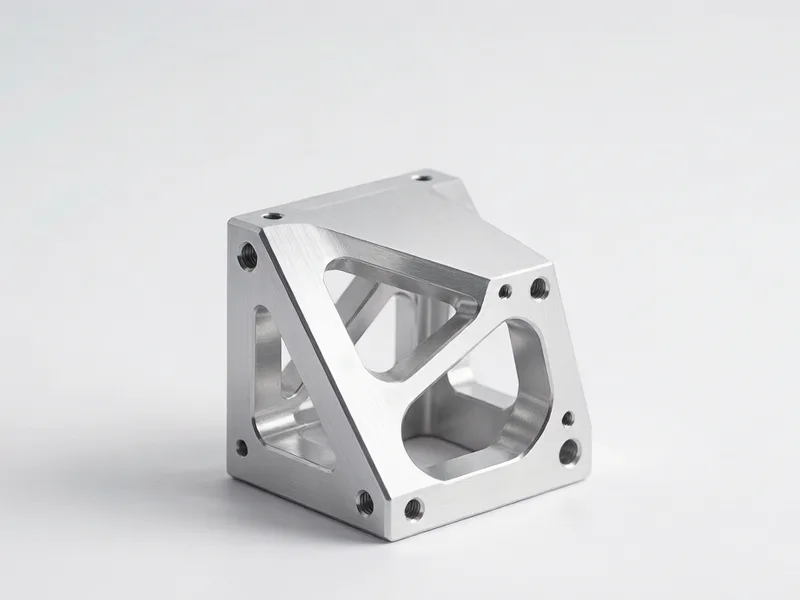
Structural Parts
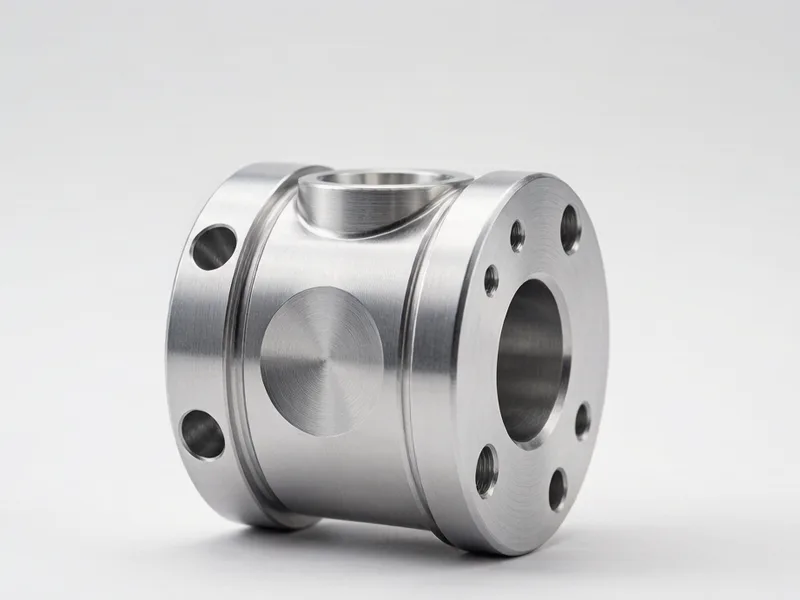
Precision Components
Quality Control
Robotics Quality Standards
Motion control components demand the tightest tolerances and surface finishes.
Repeatability Testing
Parts tested across multiple batches for ±0.005mm repeatability. Quality data available for critical dimensions.
Surface Roughness Control
Bearing surfaces finished to Ra 0.4–0.8. Mating surfaces matched for optimal fit and motion.
Heat Treatment Report
Gear and shaft heat treatment documented with hardness test results. Full process traceability per batch.
Dimensional Stability Verification
Stress-relief treatment before final machining. Critical dimensions can be CMM-verified on request.
In-depth guides
Robotics machining guides
What to know before you specify materials, tolerances and finishes for motion-control parts.
Let Precision Grow Itself: Design Rules for Mecha Beginners
Last time: which joint to build first. This time: how to make it accurate — datum, one setup, spigot. You don't need tolerance symbols yet.
Sep 16, 2026 →
Mecha Is Just Joints × N: The First Thing You Build Isn't a Mecha
A mecha looks like thousands of parts. Take it apart: joints, frame, brain, skin. Inside a joint, only the housing and the flange get machined.
Sep 15, 2026 →
How to Choose Materials for Robot Joints: Seven Decisions, from Load Spectrum to Batch Consistency
Joints carry over half a robot's BOM cost. The wrong material adds 30% weight, halves fatigue life and doubles unit cost — often all three at once.
Sep 11, 2026 →
Robot Joint and Flange Parts: What Actually Gets Machined (and What This Industry Really Cares About)
The parts inside a robotic arm — joint modules, reducer housings, end effectors, links — and the four requirements that shape each one.
Sep 10, 2026 →
From 10 to 1,000: What Actually Changes When a Robot Part Goes to Production
Making one good part is easy; making part 200 match part 1 is the job. Where the process changes with quantity, and why a hard fixture often never pays off.
Sep 10, 2026 →
One-Setup 5-Axis Machining for Robot Parts: When It Pays, When It Doesn't
When does a single 5-axis setup genuinely save money on robot structural parts — and when is it just an expensive machine doing a 3-axis job?
Sep 10, 2026 →
Anodizing Robot Parts: The Dimension Trap Nobody Draws
Anodizing is where a part comes back a different size. Film thickness versus fits, why internal threads seize, and the note to add to the drawing.
Sep 10, 2026 →
Robot Parts Materials: What to Use for Every Component (and How to Cut Cost)
What material each robot subsystem should use — frames, joints, end effectors, housings, wear parts — and the rules that cut part cost by 30-50%.
Sep 8, 2026 →
General foundation
The chain every part goes through — drawing, DFM, material, machine, finishing, quote.
Shake the Sand Out of Your Shoe: Why We Retired Two Machines
Sold for RMB 20,000 each. The replacements cost more than ten times that. On paper the math says no. Here is what actually forced the decision.
Same Part, Same Drawing — So Why Can Two Quotes Differ So Much?
An 8,000-piece order. Inspecting box by box caught 140 parts that would not pass the Go gauge. A cheap quote never removes inspection cost — it moves it.
POM Costs Less Than Metal. So Why Is the Machined Part Pricier?
Acetal stock costs less than aluminum, yet the finished part often costs more. Material is one line in the quote; grip, heat and measurement are all the rest.
Inspection and Acceptance: What to Check When Parts Arrive
The report came back green, then assembly failed. Good inspection isn't fault-finding — it answers "will it work" with data before you build.
Why Your Parts Won't Assemble: Fit, Accumulation, and Datum Transfer
The drawing is right, machining is in tolerance, yet assembly jams — three effects stacking at once: fit, tolerance accumulation, and datum transfer.
Tighter Isn't Better: Which Dimensions Are Worth Paying For
Treating tolerance as a precision score is the most expensive mistake on a drawing. The standard says class m, and weigh what the shop can hold.
From Idea to Quotable Drawing: The Minimum You Actually Need
You have an idea, a photo, or an AI-generated model. How does it become something a shop can quote? Not what to write on a drawing — how one exists at all.
Before or After Finishing: The One Line Most Drawings Forget
Leave the basis blank and the shop, the finisher and inspection each assume something different. Three ways to write "before or after coating" so they can't.
AI Can Draw It. Can It Be Machined? DFM in the Age of AI
Generative design can cut 40% of a part's weight in seconds — but DFM still needs a human. What AI leaves out, and three checks before you send a drawing.
Why Lead Time Is Worth Paying For: A Million Quotes, Very Few Suppliers Who Can Actually Keep Up
Send one drawing to three shops and the quotes come back three times apart. What customers really buy isn't machine time — it's not having to worry.
From Drawing to Cost: How a CNC Part Actually Gets Made
A beginner's walk through the chain — drawing, DFM, material, machine, programming, finishing — and where the money in a CNC quote actually goes.
Machining and Surface Finishing: Where Most of the Calendar Actually Goes
The two stations that eat the most time and money: what happens on the machine, why finishing is outsourced, and the traps that catch first-time buyers.
Which CNC Machine Does Your Part Actually Need? (And a Short History of How We Got Here)
3-axis, 4-axis, 5-axis, turning, mill-turn, wire EDM or grinding — which should make your part? Match geometry to process, from punched tape to AI.
How to Choose a CNC Machining Supplier in China: A Practical Guide to Quality, Price and Lead Time
More than price: the 7 checks that separate a real machine shop from a middleman, and 4 questions that expose a weak delivery promise.
6061 vs 7075 Aluminum: How to Choose the Right Alloy for CNC Machining
6061 or 7075? Compare strength, machinability, corrosion resistance, cost and typical applications to pick the right aluminum for your part.
Need Robotics Parts Machined?
Upload your drawings — engineer feedback within 2h.