
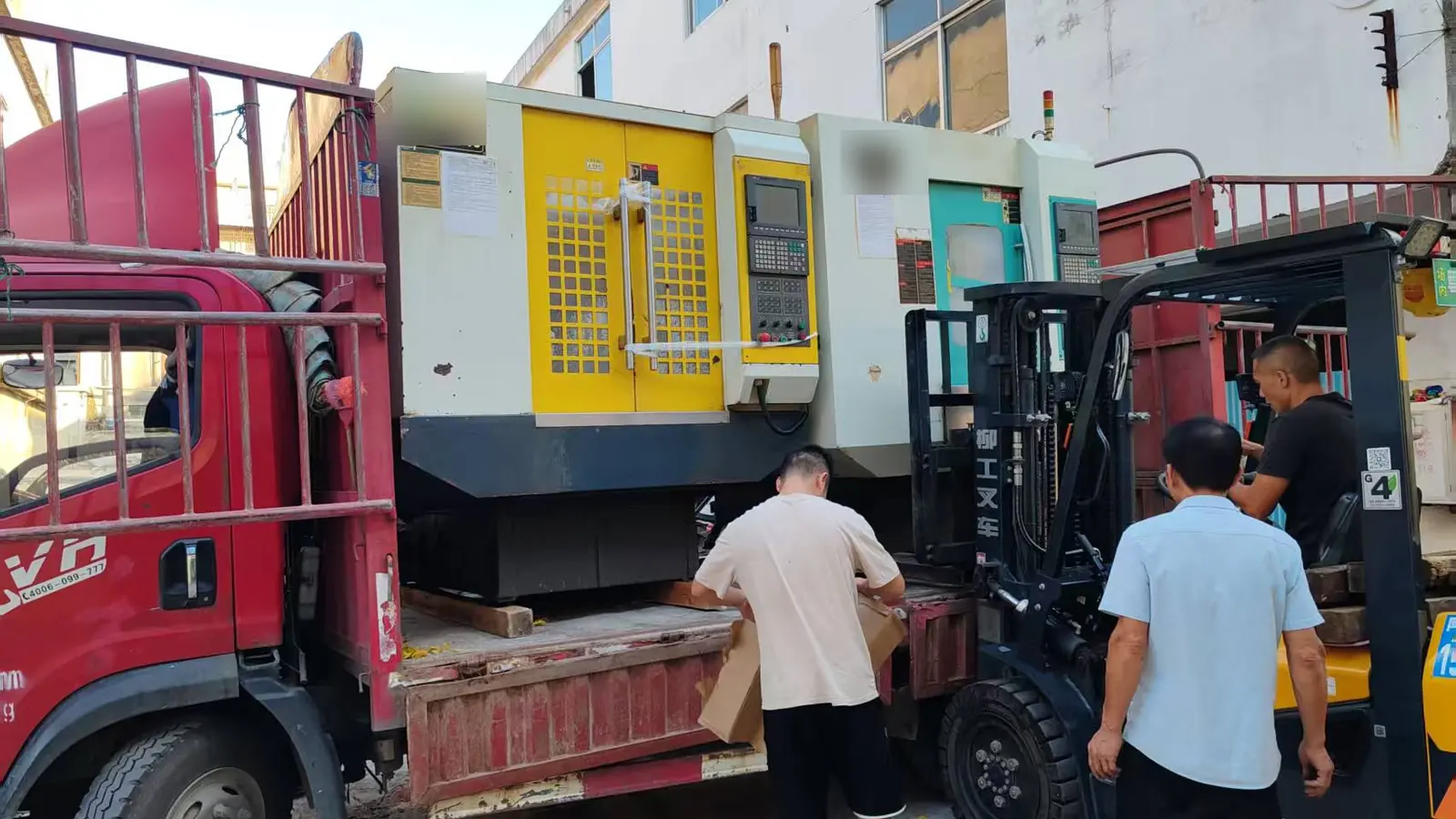
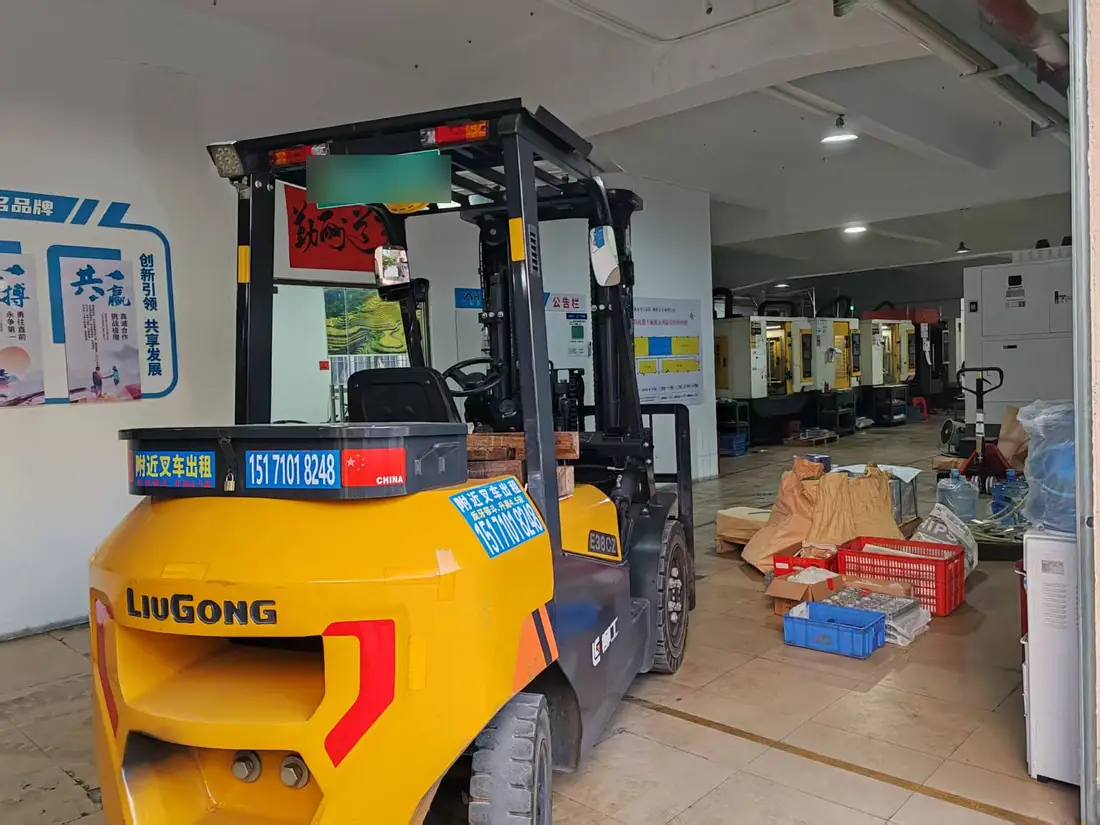
The floor space is already cleared.
The old machines are gone. The new ones are not here yet.
The new machine was due today. It did not arrive.
The supplier says scheduling and logistics are both congested. I believe them — not out of trust, but because the numbers say so.
The China Machine Tool & Tool Builders’ Association (CMTBA) reports that in the first half of 2026, new orders for metal-cutting machine tools grew 20.5% year on year, and the order backlog grew 19.1%. Orders are coming in faster than capacity can ship them. The queue only gets longer.
The same report holds a detail fewer people notice: industry revenue reached RMB 530.9 billion, up 7.6%, and total profit RMB 19.6 billion, up 110.8% — which sounds like a boom. But the average profit margin is only 3.7%, below the 4.5% average for the machinery industry.
In shop-floor terms: machine tool builders were busy this half-year, but not profitable.
Busy with thin margins means no appetite for aggressive capacity expansion. No expansion means delivery dates slide right. So a late machine is not a broken promise. It is an entire supply chain running over capacity.
Source: CMTBA, Machine Tool Industry Economic Performance, H1 2026.
Waiting does not help. A machine on the floor is an asset. A machine in transit is a promise. Until the promise lands, the best we can do is prepare the space and wait.
The space is prepared — floor re-marked, material flow rerouted. But the space is empty. Every empty day is a day of capacity that never lands.
That said, the accounting deserves a straight answer, or we will relitigate this next year.
1. Why it had to be replaced
Those machines had been on the floor a long time.
There is a saying in this trade: with an old machine, the question is not whether problems come, but when. It sounds pessimistic. It is accurate. Worn guideways, backlash in the screws, spindle runout, aging control hardware — none of that is fixed by a rebuild. A rebuild only moves the failure frequency from weekly to monthly.
What is interesting is that in the photos from the day they left, they did not look old. Paint intact, sheet metal clean, sitting on the truck looking respectable.
That is exactly what made them hard to retire. Real liabilities never look like liabilities.
They sold for RMB 20,000 each.
RMB 20,000. The replacements cost more than ten times that.
On paper the math says no. So this was never a money decision. Three other things forced it.
First: they broke, and always at the wrong time.
The cost of a stopped machine is never the electricity for the hours it sits idle. It is the shipment that does not go out. It is the customer’s line, downstream of yours, waiting on parts. It is a promise of delivery on the 15th, and a spindle noise you hear on the evening of the 14th.
Once or twice, a customer understands. Three or four times, and you move from “approved supplier” to “call them only if we are desperate.” On-time delivery is invisible when you get it right a hundred times, and unforgettable when you get it wrong once.
Second: its precision ceiling had become our ceiling.
This shop is moving toward precision parts and higher-value work. That is not a slogan, it is the customer mix — the buyer who pays for tolerance and the buyer who pays for the lowest price are two different businesses.
And the old machines’ positioning accuracy and repeatability were already at their limit. Your best machinist cannot out-run a machine that shakes. For precision work, step one is not hiring a better operator. It is owning a machine that holds still.
An experienced hand can compensate for part of it. But that compensation rides on every part you ship, forever.
Third: it took up space.
This sounds like the cheapest reason. It is the most expensive. Floor area is fixed. The position held by a low-output machine is a position an efficient line cannot take. On a shop floor, space is not for storing things. It is for producing.
Put the three together and there was only one answer.
2. The real loss never shows up on the P&L
If you only count what you spent on repairs, the math never resolves. Repairs are not expensive. Everything else is.
Scrap. When precision drifts, every part gets inspected. Inspection turns into sorting, sorting turns into rework, and what cannot be reworked becomes scrap. Once scrap rises, material, labor and tooling all sink with it. The margin on that batch is gone.
Attention. An unstable machine consumes people. The machinist watches it. The shift lead covers for it. The planner builds buffer around it. Somebody lies awake wondering whether it will stop again tomorrow. None of that appears on any report, and it is the most expensive cost there is — it does not consume money. It consumes people.
Money lost can be earned back. People worn down do not come back the same.
So my test became simple: keeping the old machine was never saving money. It was paying in scrap and attention, in installments, for equipment that should already have retired.
Those installments only get more expensive.
3. Waiting is not wasted time
The delay actually clarified something.
I used to think of equipment upgrades as buying efficiency. Now it looks more like buying certainty.
What a customer wants is not cheap. It is what you said you would do, when you said you would do it. Two weeks means two weeks, regardless of which machine misbehaves in between. Whether you can keep that promise is not a matter of luck. It depends on how stable the equipment is — stability is not an attitude. It is capacity.
Stable equipment lets you load the schedule. A loaded schedule lets you commit to dates. Dates you can hold are what make a customer trust you with the parts that matter. That chain starts at one machine.
4. The grain of sand
This reminded me of a story I heard as a kid.
A traveler is walking and feels something digging into his foot. He looks down. There is sand in his shoe.
He stops, takes the shoe off, shakes the sand out, puts it back on, and keeps walking.
As a kid, I understood the story as “don’t let small things derail big things” — meaning put up with it, don’t stop.
I think I had it backwards.
He was not fussing over a grain of sand. He knew that walking on it would wear his foot raw, and a raw foot does not reach the destination. That one minute of stopping is the best investment of the whole trip.
The grain itself is worth nothing. It is enough to keep you from finishing the road.
That is what this is.
Those machines were the sand in our shoe.
They were not unusable. They would turn today, and probably tomorrow. But they put risk into every delivery, uncertainty into every precision part, and kept the whole team in a permanent state of firefighting.
Remove the instability, and the output becomes stable.
It really is that plain.
I do not control when the machine arrives. But I know that the moment it lands, gets leveled, runs its first article and passes inspection, we will have finally shaken the sand out.
Then we keep walking.